An old police station turned into a cozy house with a soul – ruin renovation in the Kłodzko Valley
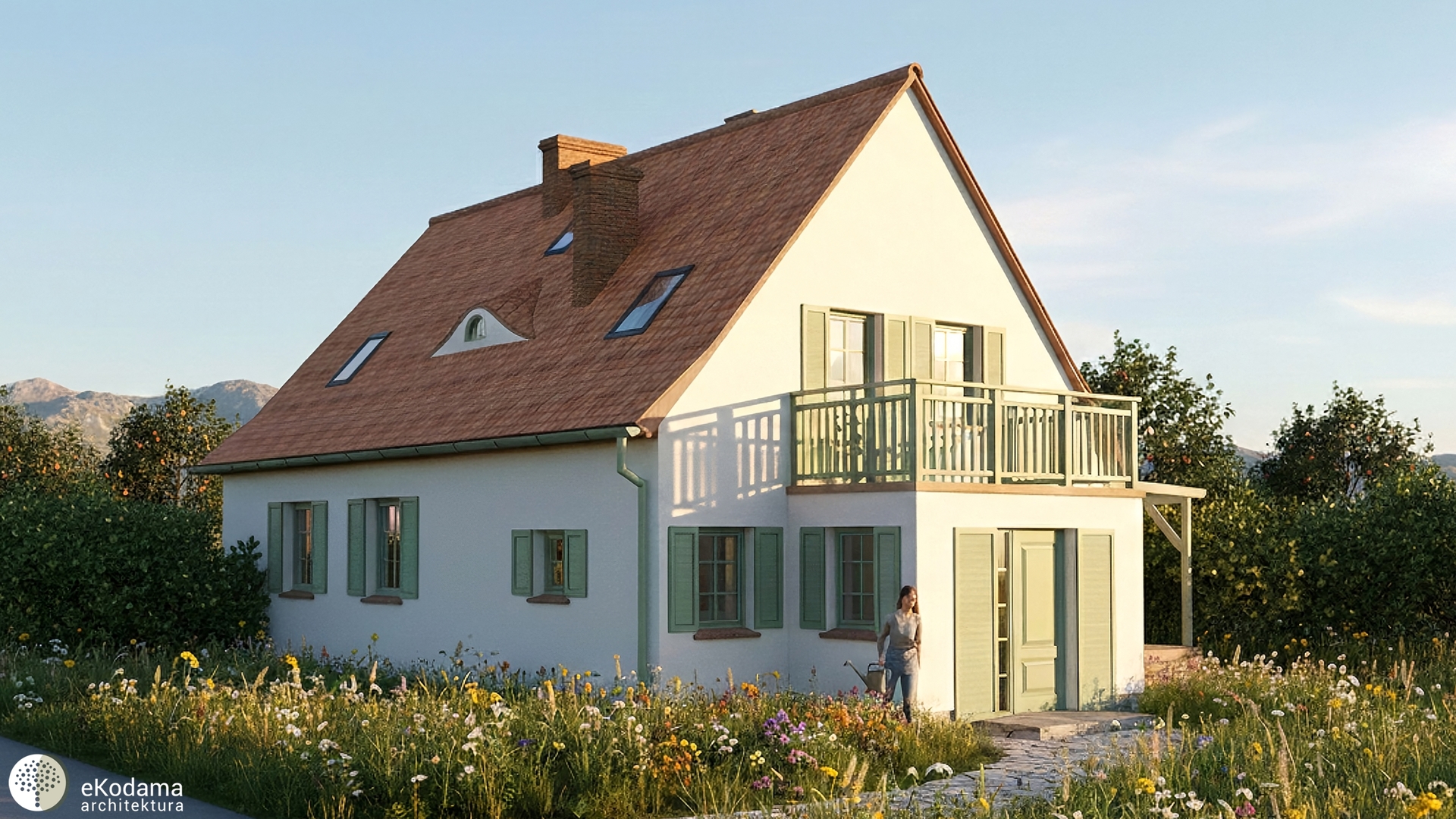
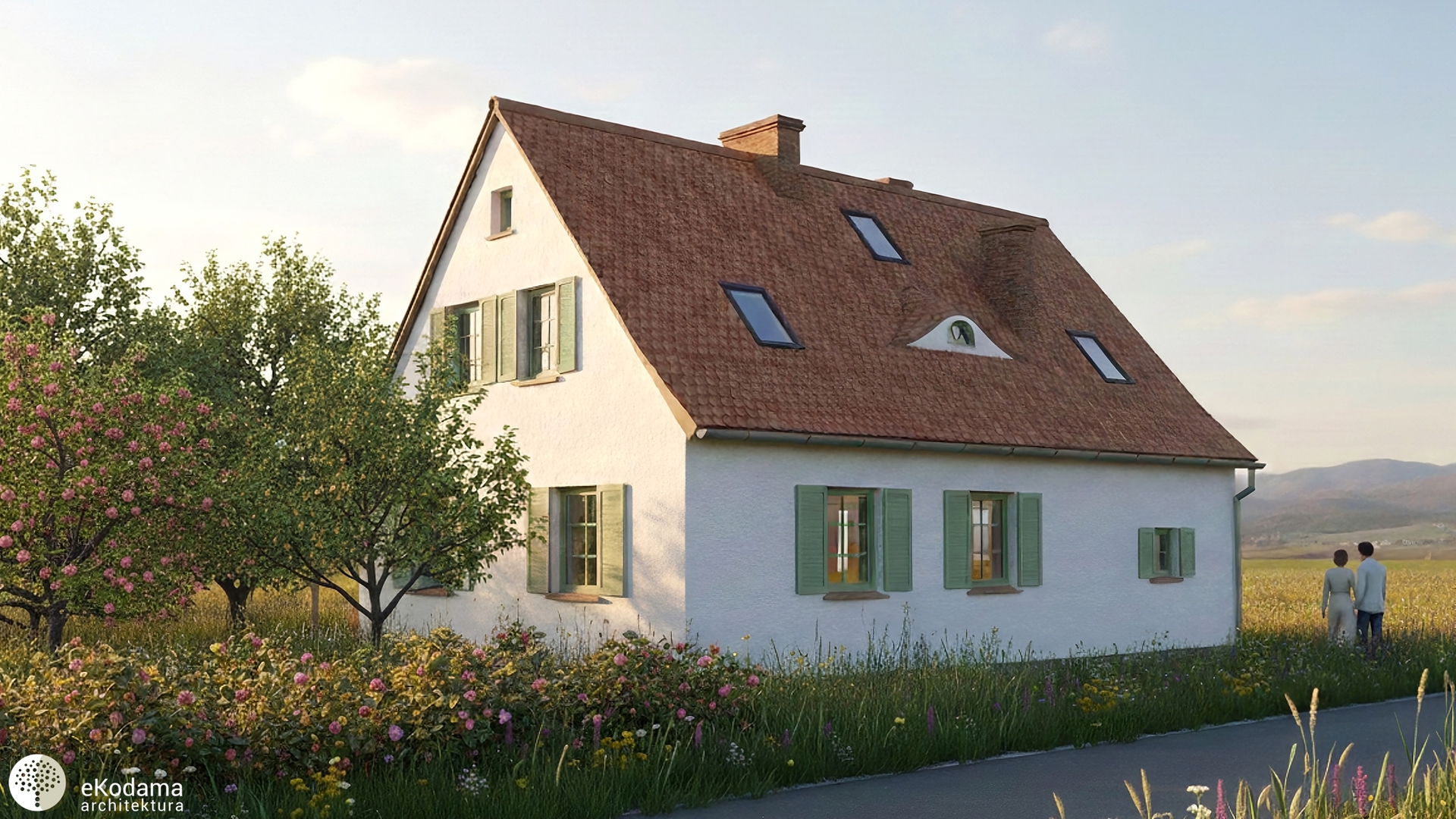
Isn't it wonderful to fall in love with an old ruin and give it a completely second life? At eKodama, we are constantly falling in love with old houses. Where others see only old walls and problems, we see tremendous potential. This charming, pre-war building in the Kłodzko Valley, which once housed the local police station, has just been given a second life. We designed its renovation as a summer haven for a wonderful couple who decided to spend the autumn of their lives here. We wanted to create an authentic, warm place for them, fully integrated with the idyllic mountain surroundings.
Project idea and functional layout
From the very beginning, the investors had great respect for local architecture. They wanted to preserve the character and proportions of the building, focusing on remodeling the interior rather than the exterior walls. This resonates perfectly with our philosophy, which is why the main structure was preserved. The building has two main floors, and each of them features additional internal level changes. Initially, the investors considered leveling them out to make moving around easier, but it quickly turned out that keeping this historical division gives the interior an incredible, unique character. Sometimes what seems like a challenge becomes the project's greatest asset!
Parameters
- Project type: Renovation with remodeling and expansion
- Function: Residential (year-round house)
- Technology: Traditional with elements of natural architecture
- Standard: Energy-efficient – after thermal modernization
- Building footprint: 113 m²
- Usable area: 141 m²
- Width: 8.23 m
- Length: 14.75 m
- Ridge height: 8.22 m
- Roof: Pitched (gable), red beaver-tail roof tiles
- Number of rooms (including living room): 6
- Number of bathrooms: 2
- Number of floors: 3.5 (ground floor, usable attic, loft, basement)
- Facade finish: Natural lime plaster
Design: eKodama STUDIO
- Lead architect: Magdalena Górska, MSc. Arch.
- Design collaboration: Oliwia Maciejewska, MSc. Arch.
- Project year: 2025/2026
- Renovation year: 2026/2027
- Investor: Private
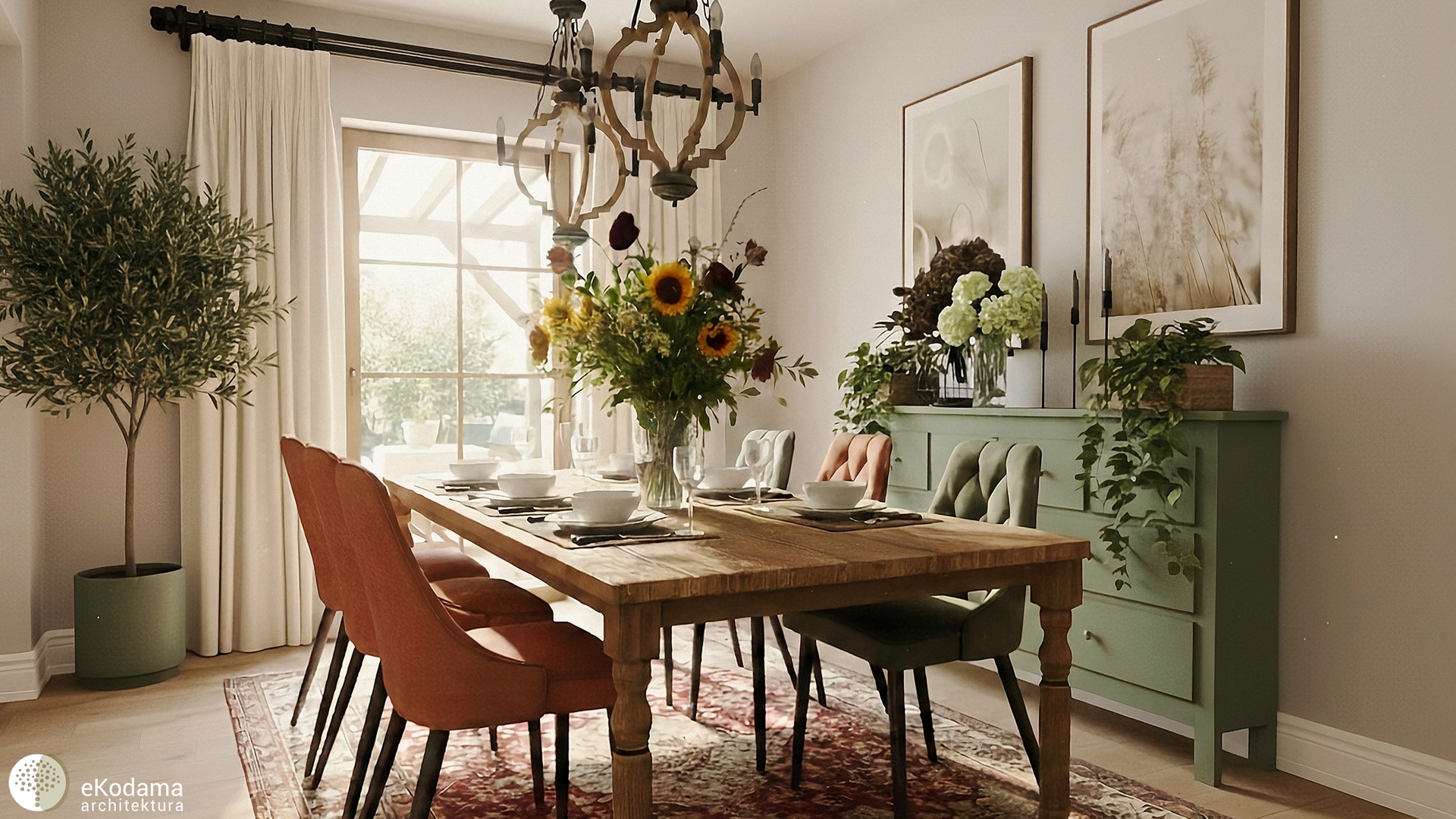
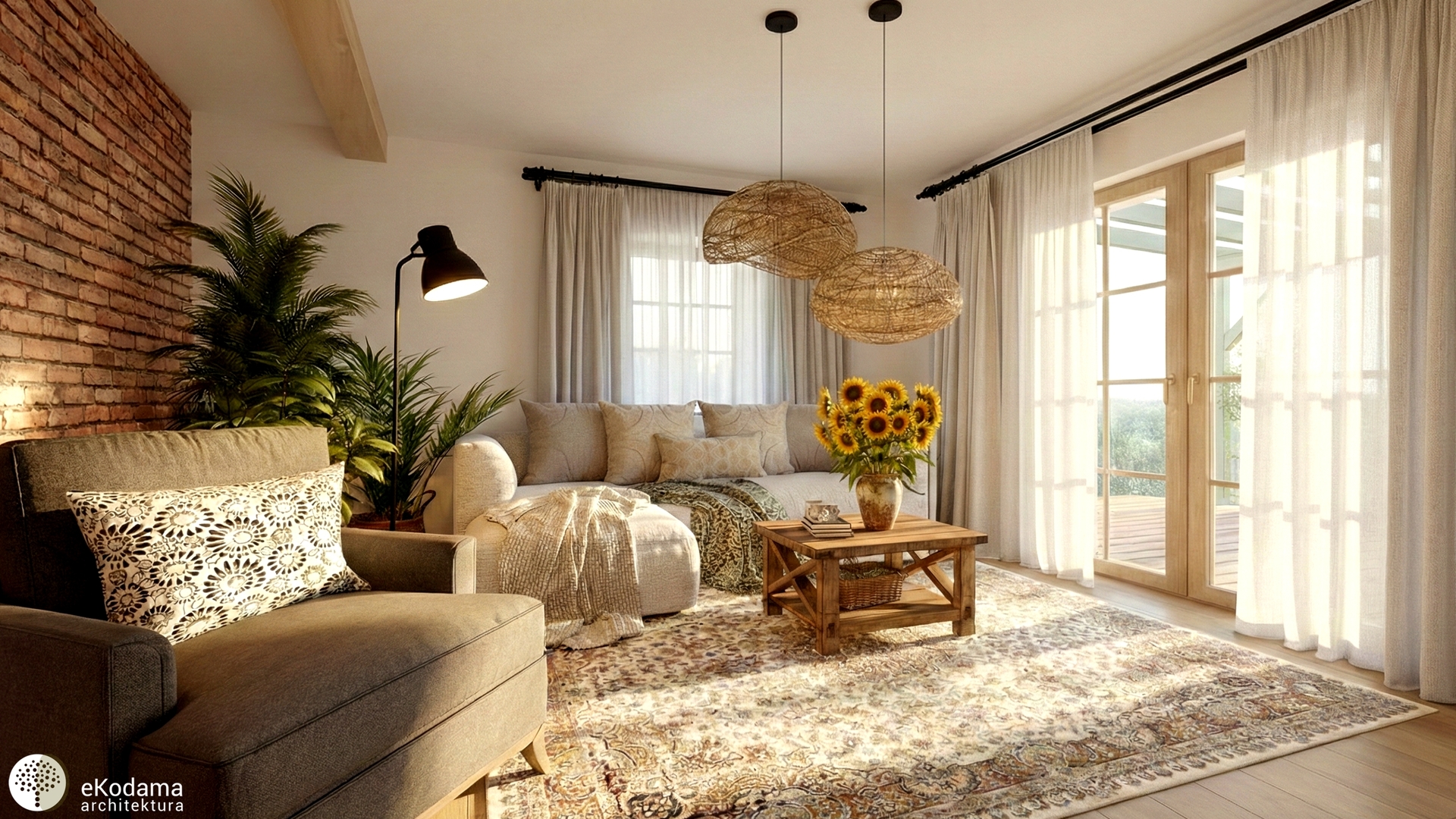
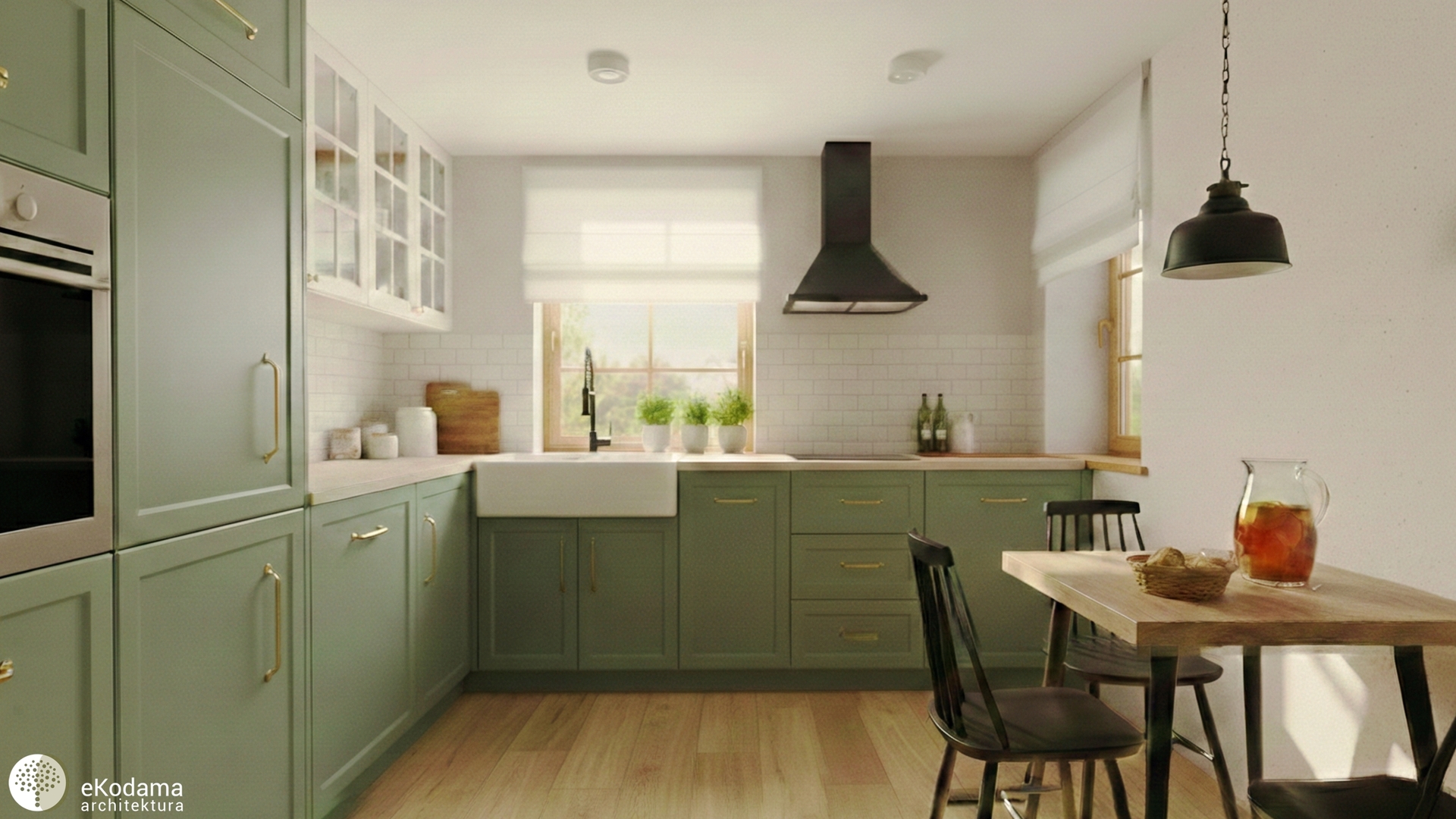
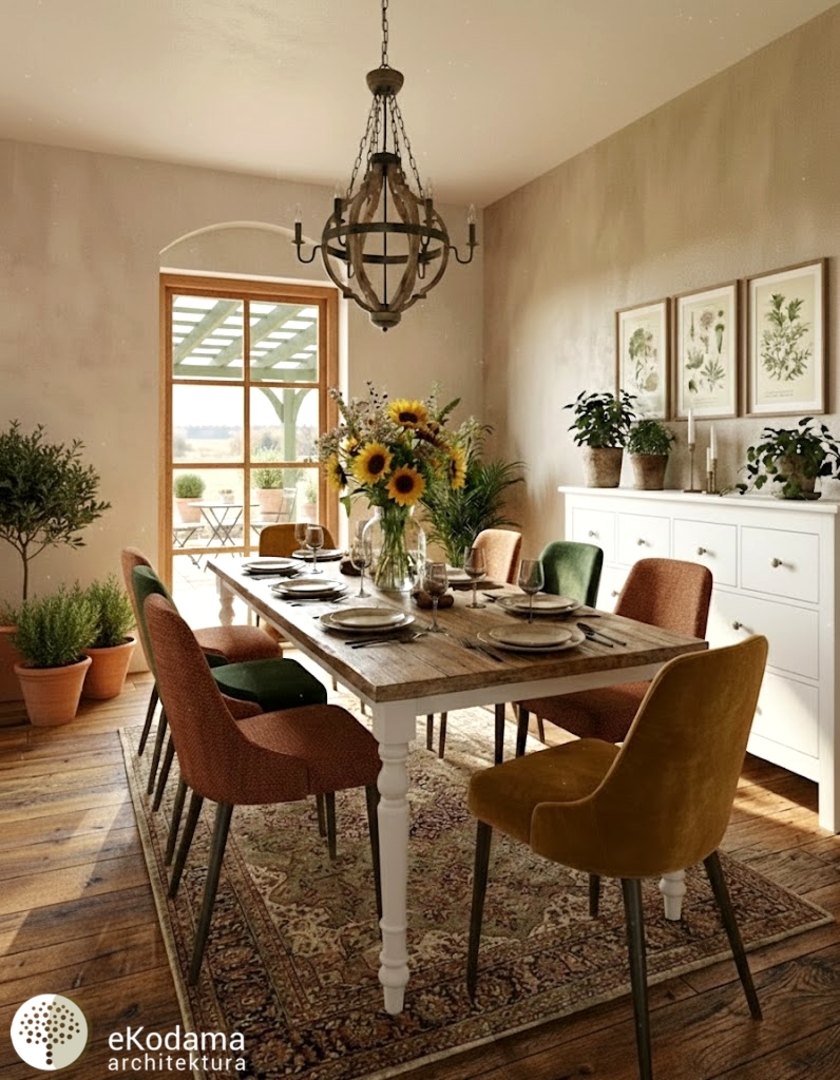
Thanks to this, on the ground floor, in the lowered section, there is an atmospheric kitchen, while on the elevated part, we placed the dining room, a living room with a fireplace and access to the veranda, and a guest room. Original wooden stairs lead to the attic, and the corridor space opens into a workspace separated by a lowered floor level. The workspace is the heart of the attic, featuring an impressive wooden roof structure visible all the way to the top. The character of this interior is also enhanced by an exit to the balcony, designed over an existing porch added to the main building. The attic also houses two bedrooms and entrances to the next level – the space of the second attic divided into two parts (accessible from the master bedroom and the corridor), which contains a storage room and a sleeping area for children. Most of the rooms retain their historical layout, having only been given a new function and better natural lighting.
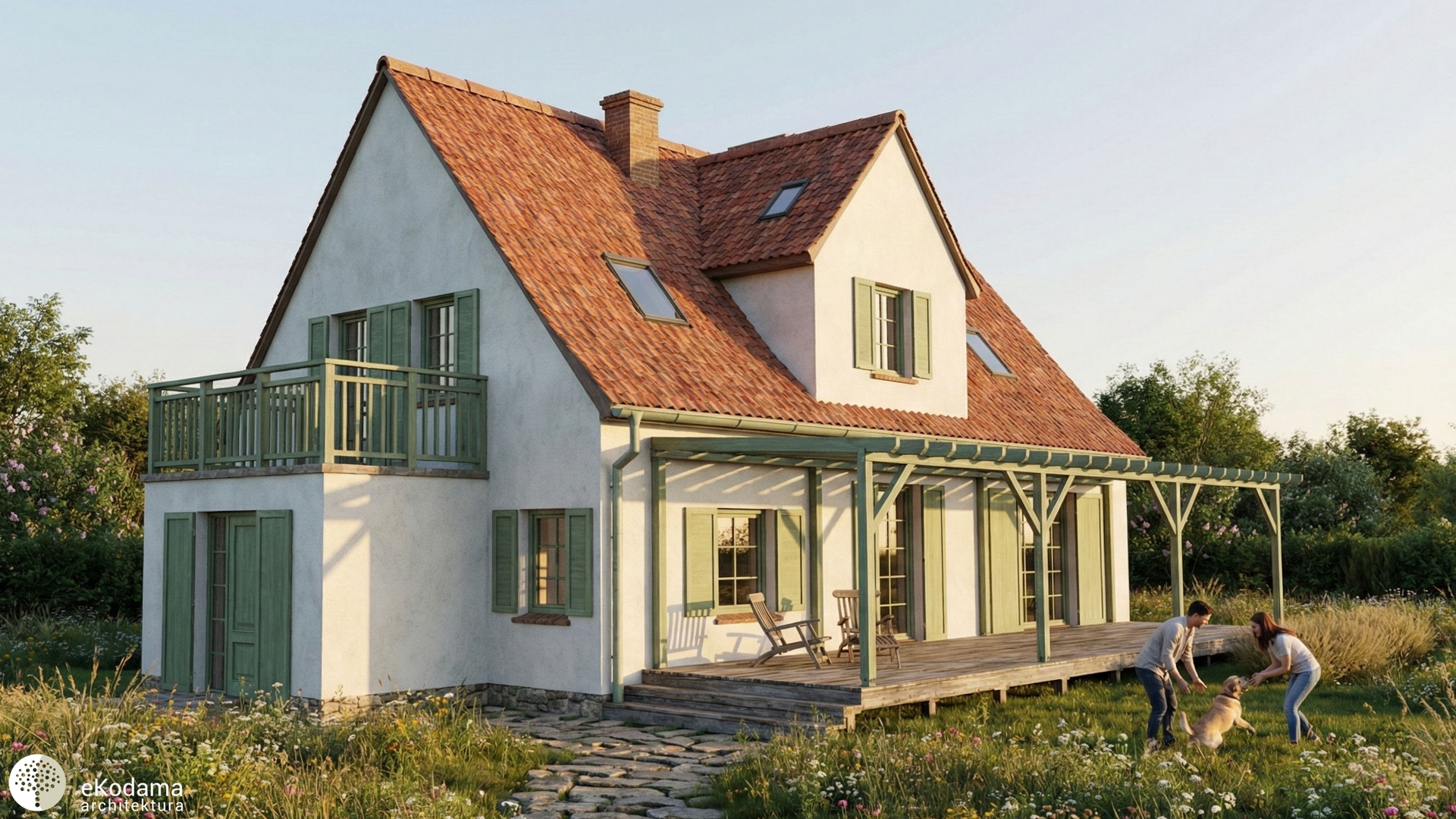
We also owe the character of this house to the wonderful investor – her love for design resulted in beautiful, sage-colored window frames. A new element is the roofed veranda facing the garden. We designed large glazings in the building itself on the veranda side, which open the interior to the old plum orchard.
Ecological and regenerative solutions
As a studio dealing exclusively with natural architecture, we know that the most ecological building is the one that already exists. Preserving the old fabric is a huge saving of resources and a great reduction in construction waste. The project is based on deep thermal modernization and brightening the interiors with new windows. We combined traditional methods with innovative technology – the thermal insulation is based on wood fiber materials (Steico) and natural straw boards (VestaEco / straw board insulation). Using this type of insulation allowed us to create fully breathable (vapor-open) walls. Such a wall acts as a natural buffer – it freely allows water vapor to pass through and automatically regulates humidity, which prevents the formation of mold and creates a healthy microclimate inside, perfect for allergy sufferers.
Technology and applied natural materials
In our projects, there is no place for cold concrete or toxic construction chemicals. We designed the use of materials that do not emit harmful compounds into the interior and age beautifully over time. We planned to finish the walls with clay and lime plasters, which build incredible softness and comfort inside. They perfectly complement wood – the main hero of this house. According to the project, the original floors will be restored so that the house maintains contact with its history. The historical roof will get a new covering of classic, red beaver-tail roof tiles. From the outside, the building will be complemented by wooden details (shutters, boarding) and noble light sandstone cladding in the plinth area and on the terrace, emphasizing its rustic and authentic character.
Resource cycle and installations
We designed the building to rationally and modernly manage energy and water. As the main heat source, we planned zero-emission infrared heating, supported by an air-source heat pump (an air conditioner with a heating function), ultimately powered by a photovoltaic installation planned on the plot. An alternative, independent source will be a traditional wood-fired masonry heater, supported by a hot air distribution system. The project includes total rainwater recovery, collected in an underground tank, and a modern home sewage treatment plant, filtering water to lake purity standards. Out of respect for the existing fabric, we preserved natural gravity ventilation based on the old chimneys, equipping them only with cowls to prevent reverse drafts. Restoring the splendor of such places and saving old houses from being forgotten is a never-ending adventure for us. We hope that this realization will inspire others to look more boldly at old walls – that it is possible to create a rustic, warm haven, living in complete harmony with nature (slow life). If you have your own little ruin and are looking for a studio that will approach it with heart and uncompromising knowledge of natural building – feel free to contact us.
Keywords, tags: renovation, old house renovation, ruin renovation, historic building renovation, old police station, second life of an old building, ruin restorers (ruinersi), house with a soul, house with character, cozy home, rustic home, authentic home, healthy home, ecological, eco home, natural home, year-round, breathable building, healthy and natural renovation, natural materials, non-emitting materials, clay plasters, lime plasters, thermal modernization, natural insulation, straw board insulation, Steico, VestaEco, resource saving through renovation, natural architecture, mountain renovation, Kłodzko Valley, wooden facade, energy-efficient, eKodama, architect Magdalena Górska, sustainable design.